

Celebrate Everlasting Love with Timeless Elegance
In Tokyo, beauty is often found not in what is shown, but in what is quietly held back.
The word IKI emerged in Tokyo—then Edo—between the 1840s and the early 1900s, in the Fukagawa district.
Fukagawa is not only part of Tokyo’s cultural history; it is also deeply personal to me. It is in the zone where I lived during my early teenage years, and where my own roots quietly remain.
IKI was originally used to describe the celebrated geisha of Fukagawa.
It referred not simply to beauty, but to a way of being: refined yet unforced, elegant with a trace of masculinity, never flattering, deeply attuned to human emotion, and possessing the confidence not to overstate.
MIYOCO carries this sense of IKI at its core.
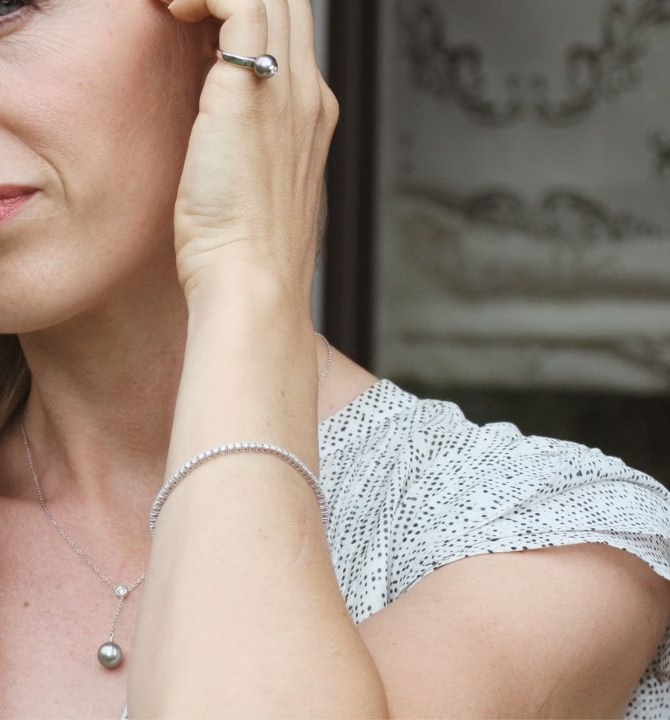
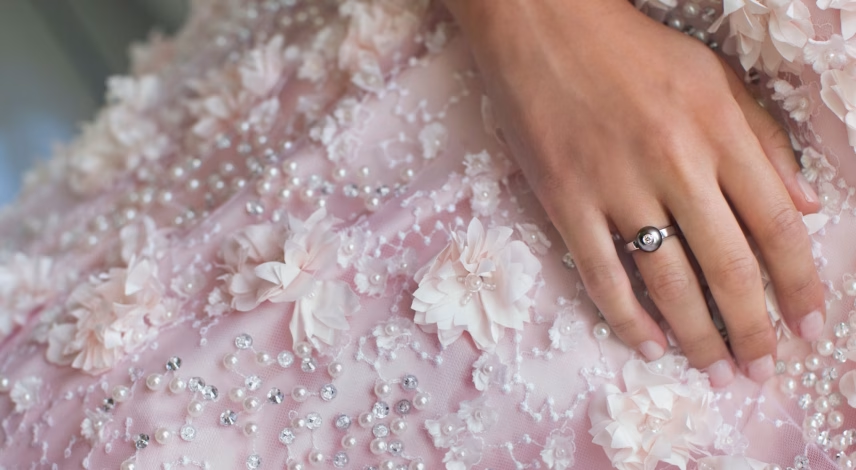
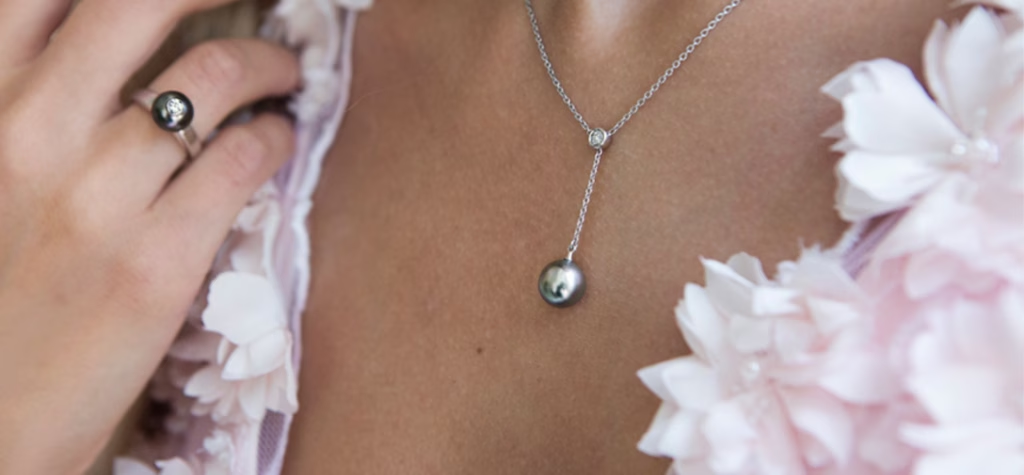
Wearing MIYOCO jewelry naturally elevates one’s presence through the quality of its materials—but that is only the beginning.
More importantly, there is comfort.
A design that does not seek attention, yet feels unmistakably its own.
A quiet warmth, a subtle playfulness, and a composed clarity that feels restrained rather than rigid.
Softness and tension.
Intention and ease.
Within this delicate balance, IKI quietly lives.
Japanese aesthetics taught me the importance of space—not as emptiness, but as meaning.
In fine jewelry design, this is essential.
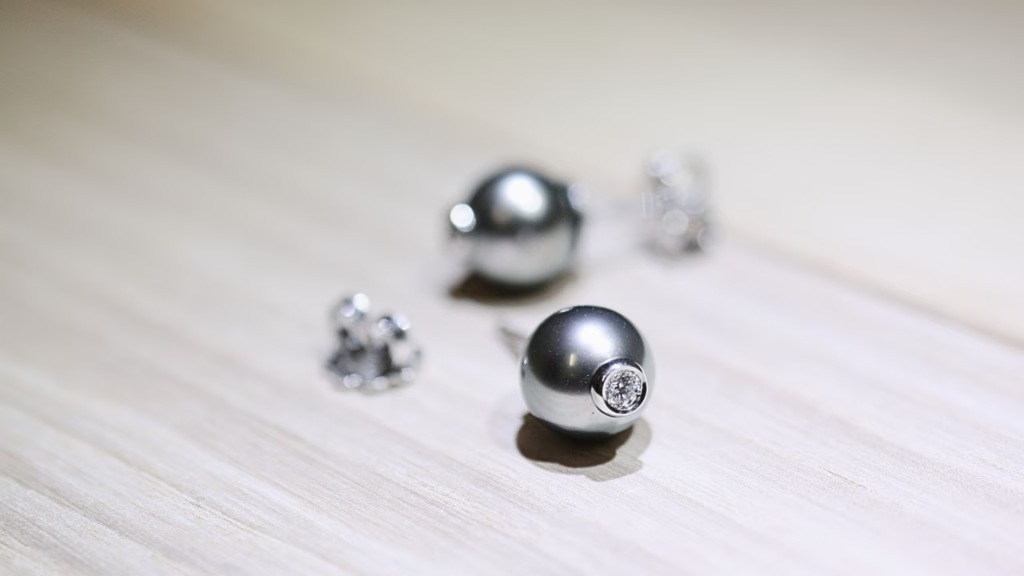
When we consider the placement of diamonds, we do not look only at the stones themselves. We pay equal attention to the spaces between them—the invisible intervals where rhythm is born.
When beauty emerges within that silence,
when movement and calm coexist,
the piece becomes MIYOCO jewelry.
What is not said.
What is not shown.
The sensibility of IKI, shaped by Tokyo, continues to breathe quietly within every design I create.
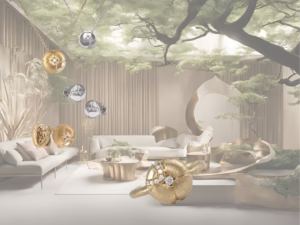
An intimate glimpse into the world of MIYOCO —
from the atelier in Valenza to the quiet beauty that inspires each creation.
Reserved for a small circle of women who appreciate timeless elegance.
Crafted in Valenza with intention and care ♡